




Dubai buyers are increasingly looking beyond the unit itself, assessing the infrastructure, connectivity and community planning that could shape residential value over the next decade. Read thoughts from Tauseef Khan, Founder and Chairman, Dugasta Properties on the same.
September 25, 2026 | Tauseef Khan | UAE | Developers | 3 Min Read
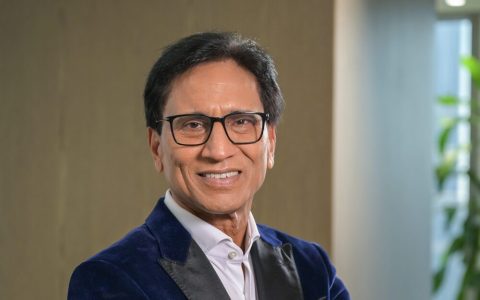
Image Courtesy: Official Communications
Not long ago, most conversations about buying property in Dubai began with four things: price, payment plan, square footage and expected return.
Today, the conversation is changing.
Buyers increasingly want to know what a community will look and feel like five or ten years from now. They are asking about future transport links, schools, healthcare, green spaces, employment centres and the long-term direction of the surrounding neighbourhood.
I have watched this shift take place in real time, and I believe it represents an important change in how residential value is being defined in Dubai.
The next million-dirham property decision will not be determined by price alone. Increasingly, it will be determined by what is being planned around that property.
Property markets rarely change overnight, but buyer priorities can evolve quickly.
People are no longer assessing only the apartment or villa they are purchasing. They are thinking more carefully about how they will actually live there.
Can they walk to a park? Will their commute become easier? Are schools and healthcare nearby? Will the neighbourhood continue to serve their needs as their family or lifestyle changes?
And perhaps the most important question: will this community be more desirable ten years from now than it is today?
Dubai’s long-term urban strategy gives buyers reason to think this way. The Dubai 2040 Urban Master Plan anticipates the emirate’s population reaching approximately 5.8 million by 2040, with integrated communities, accessibility, green spaces and quality of life forming important parts of future growth.
This is also changing how buyers view emerging locations. Areas such as Dubai South, parts of Dubailand and Dubai Creek Harbour are attracting attention not simply because of today’s pricing, but because buyers can see infrastructure, employment and community development taking shape around them.
The opportunity is increasingly being assessed through tomorrow’s ecosystem rather than today’s postcode.
As established communities appreciate, buyers naturally widen their search. But they are not simply chasing lower prices.
They are following future investment.
Where will the next employment centre emerge? Which neighbourhoods will gain stronger transport links? Where are schools, hospitals and public spaces being developed? Which areas are becoming part of Dubai’s next phase of growth?
The Dubai Metro Blue Line illustrates why this matters. The 30-kilometre line, currently under construction and scheduled to begin operations in September 2029, will include 14 stations and connect important residential, academic and commercial districts with the existing Metro network.
Infrastructure of this scale can influence perceptions long before the first passenger boards a train.
A new road, Metro station or school does more than provide convenience once completed. It gives buyers confidence that a location is becoming part of the city’s longer-term development story.
Developers can build impressive towers and villas. Creating a neighbourhood where people genuinely want to live, remain and build their lives is considerably harder.
That is why buyers are paying greater attention to what exists beyond the project boundary.
Schools, cafés, parks, healthcare, retail and recreation become more valuable when they function as an interconnected ecosystem rather than a collection of features on a sales brochure.
Sometimes the details that matter most are surprisingly simple: a shaded walking route during summer, a park families actually use in the evening, a cycling path that connects somewhere meaningful, or a supermarket and pharmacy within comfortable walking distance.
These may not create the most dramatic marketing visuals, but they shape everyday life.
Luxury amenities can also be reproduced across competing developments. A functioning community ecosystem is far harder to replicate.
Communities that get these fundamentals right are more likely to support occupancy, local businesses and sustained residential demand after the initial launch period has passed.
The true test of a development is not the attention it receives when sales open. It is how well it performs years after handover and through different market conditions.
A resilient community should work for more than one buyer profile. It should serve families, professionals, entrepreneurs, tenants, homeowners and investors, while remaining relevant as lifestyles and the surrounding city evolve.
This is where good planning becomes an economic advantage.
A project supported by transport connectivity, employment opportunities, essential services and thoughtful public spaces is less dependent on temporary trends because much of its demand comes from practical everyday value.
This matters as Dubai’s residential market matures.
Buyers are becoming more informed and selective. Increasingly, they are not simply comparing one building with another. They are comparing one neighbourhood with another—and one long-term vision with another.
The next chapter of Dubai’s residential market is already taking shape, even where many future communities have yet to be completed.
Transport links, economic centres, employment corridors and infrastructure investment will influence where people choose to live over the coming decade. Within communities themselves, smart infrastructure, energy-efficient buildings, integrated digital services and sustainable planning will increasingly influence which developments remain relevant after handover.
By the time an emerging neighbourhood becomes one of Dubai’s most sought-after addresses, much of that transformation may already have taken place.
That changes the question buyers should be asking.
Rather than simply asking which neighbourhood is popular today, it is worth understanding which communities Dubai is positioning to become important residential centres tomorrow.
If the previous property cycle was largely defined by location, I believe the next will be defined by the quality of planning behind that location.
The strongest communities will be those where infrastructure, thoughtful design and long-term vision come together with purpose.
In Dubai’s next phase of growth, the million-dirham decision may therefore be less about what stands on a plot today, and more about what is being built around it for tomorrow.
Tauseef Khan is the Founder and Chairman of Dugasta Properties.