




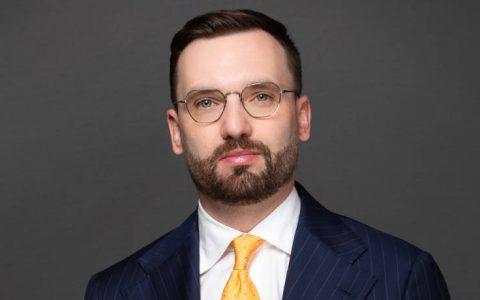
As GCC markets move forward at pace, re-entry is no longer simply about returning to business as usual. Rafal Hyps, Chief Executive Officer, Sicuro Group, explores why businesses across the Gulf must reassess supply chains, workforce models and operating footprints to build leaner, more resilient organisations that are ready to capture the region’s next wave of opportunity.
May 27, 2026 | Rafal Hyps | UAE | Facilities Management | 3 Min Read
Flights are running, schools are open, and offices are back to business as usual, so the day-to-day picture of life in the GCC looks much as it did at the start of the year. However, certain commercial and operational expenditures have required recalibration. The most notable shifts include rising insurance costs, changes in supplier networks, evolving workforce structures and lease economics. The businesses that will make the most of what 2026 has to offer will be those using this moment to take a deeper look at their operating model.
The region continues to deliver at scale, with a pipeline of opportunities few global markets can match. Re-entry, when approached strategically, is less about returning and more about coming back leaner, smarter and more resilient than before.
Re-entering the market requires a fresh approach and a clear business impact analysis to remap areas that have changed and adjust to today’s supply chain realities. Supplier exposure is often the first place where legacy or compliance-led business continuity programmes begin to show signs that readjustment is needed. The dependencies that matter most often sit deeper in the supply chain, extending to subcontractors and specialist service providers.
This should prompt companies to identify alternative suppliers and contractors to protect the recovery time objectives agreed at the start of a contract. It also raises important questions around how those alternatives are viewed from an insurance perspective and whether they remain appropriately covered under existing policies.
Geopolitical developments have also sharpened the language used by insurers when defining and mitigating risk. As policy wording evolves, continuity plans created under previous conditions may no longer remain fully relevant or adequately supported.
Another area that requires reassessment is workforce structure and how businesses can build teams that are more resilient to large-scale economic shifts. The traditional model of housing regional headquarters, commercial leadership, finance and IT functions in a single location is also worth reviewing. A stronger operating structure may involve splitting leadership across two locations, strengthening succession depth at deputy level, and reassessing where critical personnel can live and work sustainably across the region.
Operational footprint underpins the rest. Leadership teams are revisiting where roles sit, where senior decision-makers are based, and whether their structure is positioned to act on the opportunities emerging in 2026. A regional operating model that remains unchanged while the market around it evolves is one competitors are likely to outpace.
Where to base country leadership, how to split commercial and delivery teams across the GCC, which roles should be hired locally versus rotated into market, and how to align teams with shifting customer demand are increasingly becoming commercial decisions with direct impact on growth.
Remote work has also become part of the conversation. Leaders are asking which roles genuinely need to be based in-market, which can operate from regional hubs and travel when required, and which were historically positioned in-country more by habit than by strategic design.
The businesses likely to perform strongest in the months ahead will be those that can read the right signals and ignore distractions that carry little commercial weight. Across the Gulf, the organisations moving fastest are treating supplier exposure, workforce structure, remote-work design and operational footprint as core business drivers.
These are the businesses that are moving beyond inherited operating models and reshaping themselves to meet today’s market demands and capture the opportunities ahead.
(The views expressed in this column are solely those of the author and do not represent the editorial position of Real Estate Market Times.)