




Dubai's Urban Master Plan is transforming more than the city's skyline. From density and mobility to sustainability and digital delivery, developers are being challenged to rethink how buildings are planned, designed and operated.
July 01, 2026 | Riya Malhotra | UAE | Design | 5 Min Read
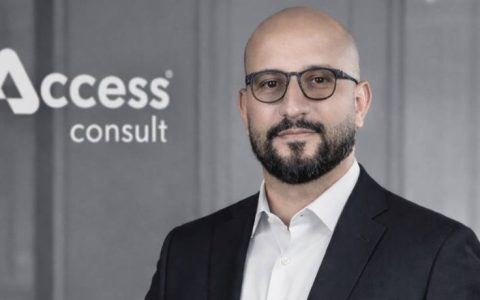
Mohamed Salah Seguen, CEO, Access Consult
Dubai's Urban Master Plan is transforming more than the city's skyline. From density and mobility to sustainability and digital delivery, developers are being challenged to rethink how buildings are planned, designed and operated.
Dubai's real estate sector has long been defined by ambition. Today, that ambition is being guided by a more structured vision. The Dubai 2040 Urban Master Plan is reshaping how the city grows, setting a clear framework for a more connected, sustainable and liveable urban environment that can accommodate a projected population of 5.8 million residents.
With development focused around five major urban centres, expanded green spaces, stronger transport connectivity and closer integration of residential, commercial and leisure districts, the master plan is changing the way projects are conceived from the outset.
For developers, buildings can no longer be viewed as standalone assets. They must function as part of a wider urban ecosystem.
One of the most significant implications of Dubai 2040 is its approach to urban density. Rather than encouraging growth everywhere, the plan concentrates development around established and emerging centres, including Deira and Bur Dubai, Downtown Dubai and Business Bay, Dubai Marina and JBR, Expo City Dubai and Dubai Silicon Oasis.
This creates opportunities for higher-value development, supported by stronger infrastructure, public transport and commercial activity. But successful density is not simply about building taller or adding more units.
Developers must carefully consider circulation, access points, pedestrian movement, shaded public spaces, parking strategies, servicing and integration with surrounding infrastructure from the earliest planning stages. Poorly planned density places unnecessary pressure on utilities and transport networks while diminishing the quality of the resident experience.
The competitive advantage will increasingly lie with developers who design for density intelligently rather than treating it as a numbers exercise.
Mobility is no longer an infrastructure issue alone. It has become a fundamental design consideration.
Dubai 2040 aims to place 55% of residents within 800 metres of public transport while enabling access to 80% of daily needs within a 20-minute journey. Major transport investments, including the Dubai Metro Blue Line and the recently approved Gold Line, reinforce the city's commitment to transit-oriented development.
For developers, this changes how projects must be planned. Entrances, pedestrian routes, shaded walkways, cycling facilities, retail frontages, parking layouts and service access all play a direct role in how communities function.
Projects that successfully integrate these elements will not only meet evolving planning expectations but also create more convenient and attractive places to live and work.
Dubai 2040 also accelerates the transition towards mixed-use, integrated communities where housing, workplaces, education, healthcare, retail and leisure coexist within connected neighbourhoods.
Supporting this vision requires a different development approach. Residential towers can no longer be planned in isolation from surrounding services, while mixed-use communities require careful coordination of pedestrian flows, servicing, fire access, parking, utilities and long-term operations.
Achieving this level of integration depends on multidisciplinary collaboration from the earliest design stages. Architecture, structural engineering, façade design, MEP systems, sustainability, cost planning and authority coordination must work together throughout the development process rather than operating as separate disciplines.
Environmental performance is becoming an increasingly important benchmark for development across Dubai.
Supported by the UAE Net Zero by 2050 Strategic Initiative, the Demand Side Management Strategy 2030 and Dubai Municipality's Al Sa'fat 2.0 Green Building Rating System, sustainability expectations now extend well beyond broad environmental commitments.
In the UAE's climate, building envelopes, façade performance, solar heat gain, ventilation strategies and efficient MEP systems have a significant impact on long-term operational performance.
The most successful projects will focus on reducing energy demand through better design before improving efficiency through technology, commissioning and operational monitoring. When sustainability is integrated from the beginning rather than added later, projects are more likely to achieve stronger performance while avoiding costly redesign during construction.
As regulatory requirements become more sophisticated, digital technologies are playing an increasingly important role in project delivery.
Building Information Modelling (BIM) enables architects, engineers and consultants to coordinate around a shared digital model, reducing design conflicts, improving collaboration and supporting faster approvals.
Digital twin technology extends these benefits beyond construction by allowing owners and operators to monitor building performance in real time, optimise operations and ensure completed assets perform as intended throughout their lifecycle.
Together, these technologies are helping developers move from reactive project management towards more data-driven decision-making across design, construction and operations.
Dubai 2040 is creating a more mature and performance-driven development environment. Success will increasingly be measured not only by location or architectural appeal, but by how effectively projects contribute to mobility, sustainability, operational efficiency and everyday quality of life.
Developers who embrace these principles early will be better positioned to secure approvals, attract investment and deliver resilient assets that remain valuable as Dubai continues to evolve.
The future of development in Dubai will not simply be defined by iconic buildings. It will be defined by how well those buildings contribute to a smarter, more connected and more liveable city.
Source: Input by Mohamed Salah Seguen, CEO, Access Consult