




UAE real estate demonstrated structural resilience in Q1 2026, with prime office vacancy at historic lows and flight to quality accelerating despite regional disruptions, according to JLL.
June 04, 2026 | Tripti Mehta | UAE | Real Estate | 5 Min Read
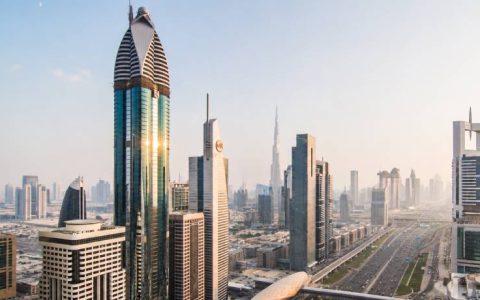
UAE real estate trends in Q1 2026 tell a story of structural resilience. Despite regional disruptions that introduced short-term occupier caution across Dubai and Abu Dhabi, the latest UAE Real Estate Market Dynamics report from JLL confirms that demand at the quality end of the market remained robust, vacancy in prime locations tightened to historically low levels, and the flight to quality that has defined the UAE commercial real estate cycle accelerated further.
For developers, landlords, FM operators and commercial tenants tracking the market, the Q1 2026 data offers a clearer picture of where the UAE real estate sector is heading and what regional tensions have and have not changed.
The most significant headline from JLL's Q1 2026 report is the continued strength of UAE office rents in the face of regional disruptions. In Abu Dhabi, prime office rents climbed 11.7 per cent year-on-year in Q1 2026. Grade A and Grade B office spaces recorded annual increases of 5.1 per cent and slightly lower, respectively. In Dubai, prime locations including DIFC and Downtown Dubai continued to lead rent growth, with prime vacancy edging up marginally to just 0.7 per cent following new building deliveries.
Abu Dhabi's citywide office vacancy stood at 1.4 per cent at the end of Q1 2026, with prime vacancy at 0.1 per cent, a level that effectively eliminates short-term leasing options for new market entrants. Total office inventory reached 4.18 million square metres in Abu Dhabi and 101.1 million square feet in Dubai.
These figures confirm that regional tensions, while introducing caution among some occupiers, have not disrupted the structural supply-demand imbalance that has driven prime rents upward across the UAE for several consecutive quarters.
|
Q1 2026 Office Market at a Glance
|
One of the more nuanced findings in JLL's Q1 2026 UAE real estate report is the divergence between headline transaction volumes and underlying value concentration. Office rental contract registrations across the UAE declined year-on-year by 6.0 per cent in Abu Dhabi and 7.7 per cent in Dubai. New monthly contracts fell more sharply, with Abu Dhabi recording a 19.7 per cent decline and Dubai a 20.6 per cent decline in March compared to February.
On the surface, this reflects occupier caution linked to regional disruptions. But Dubai's office renewal rate told a different story, posting an 11.2 per cent annual increase. Existing occupiers are committing to stay, even as new commitments slow. JLL's Head of Research for the Middle East and Africa, Taimur Khan, described the period as one in which the UAE office and retail sectors demonstrated resilience and capacity for strategic adaptation, with demand remaining robust despite short-term adjustments.
The broader pattern JLL identifies is a pronounced flight to quality, where companies increasingly prioritize premium environments, flexible leasing structures, and strategically located assets. New project launches in Dubai during Q1 2026 were primarily located outside core central business districts, and JLL notes that strata-title ownership structures in these developments generally fail to meet the requirements of regional companies and large corporate tenants. The result is a structural mismatch: physical supply is rising in non-prime locations, while quality-tier demand continues to concentrate in DIFC, Downtown Dubai and equivalent Abu Dhabi locations.
For commercial landlords and asset managers, the Q1 2026 UAE real estate trends point to three direct operational realities.
|
Q1 2026 Supply Pipeline
|
JLL's Q1 2026 report also addresses UAE retail real estate trends amid regional disruptions. The retail sector recorded a mixed quarter, with domestically focused segments maintaining resilience while tourism-dependent categories faced softer conditions. Super-regional malls and high-footfall destinations outperformed community and tourism-led retail, a pattern consistent with the flight-to-quality dynamic observed across the office sector.
Taken together, UAE real estate trends in Q1 2026 describe a market in which short-term occupier caution driven by regional tensions is masking longer-term structural strength at the quality end. The question for developers, FM operators and commercial landlords is no longer whether prime rents will continue rising, but how long supply will remain tight enough to sustain that trajectory.
Source: All figures and analysis in this article are sourced from JLL's UAE Real Estate Market Dynamics Q1 2026 report and JLL press release commentary.