



Transgulf Readymix has invested in UAE-based AC3D, combining concrete materials expertise with construction printing technology to support commercial deployment across the GCC and international markets.
November 04, 2026 | Palak Kataria | UAE/GCC | Construction | 3 Min Read
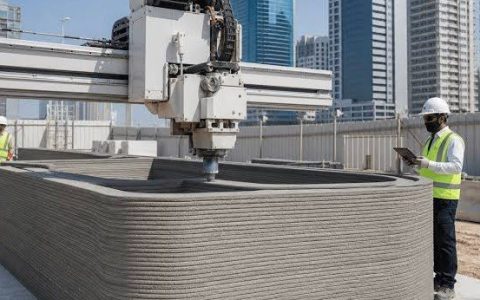
Image Courtesy: T&I News
UAE concrete producer Transgulf Readymix has made a strategic investment in construction technology company AC3D, supporting plans to expand 3D-printed building solutions across the Gulf Cooperation Council (GCC).
The investment forms part of AC3D's ongoing late-seed funding round and establishes a partnership focused on construction materials, project development and commercial deployment.
The agreement brings together Transgulf's concrete manufacturing expertise and regional network with AC3D's construction-scale 3D printing technology.
The companies intend to develop solutions that can be deployed on construction sites, with a focus on integrating printing equipment, software, materials and building systems.
AC3D is seeking to complete a $3 million late-seed financing round by the end of 2026.
Transgulf joins Oraseya Capital, the venture capital fund of the Dubai Integrated Economic Zones Authority (DIEZ), which invested earlier in the same round.
The companies have not disclosed the value of Transgulf's individual investment or the equity stake acquired.
The funding is intended to support AC3D's next stage of development, including commercial expansion across GCC markets and opportunities in the United States.
The $3 million figure represents the company's overall fundraising target rather than the amount invested by Transgulf.
Construction 3D printing uses specialised equipment to deposit printable building materials in successive layers, creating structural or architectural components based on digital designs.
The approach requires coordination between printing machinery, software, material properties and site execution.
Through the partnership, AC3D and Transgulf plan to optimise printable concrete mixes and develop commercially viable construction applications.
Transgulf, established in 1997, operates concrete production facilities in Dubai and Abu Dhabi.
The company has developed TG TABS, a concrete mix designed for 3D printing applications, and holds a licence to manufacture the material.
Combining material production with printing technology could help address technical and operational challenges associated with deploying 3D printing at construction scale.
Boris Kozlov, Founder and Chief Executive Officer of AC3D, said Transgulf's production capabilities, technical knowledge and GCC relationships would support efforts to expand the technology's commercial use.
Yasar Abualrous, General Manager of Transgulf Readymix, highlighted AC3D's combination of proprietary technology and experience in executing construction projects.
The partnership is intended to move beyond technology development towards broader project delivery.
However, the announcement does not specify a confirmed number of upcoming projects, the value of a construction pipeline or a timetable for deployments in individual GCC countries.
Construction 3D printing is attracting attention as developers and contractors explore alternative building methods and greater automation.
Its potential applications include producing building elements and delivering projects with complex geometries or repeatable designs.
Actual commercial benefits depend on material performance, construction requirements, regulatory approvals and project economics.
The agreement between AC3D and Transgulf is particularly relevant to the UAE's construction technology sector because it combines locally based manufacturing capabilities with a technology company operating from the country.
As the partnership develops, its progress will depend on translating technical capabilities into completed projects and establishing repeatable delivery models across regional markets.
Sources: Zawya, 3DPriniting.com, Sharikat Mubasher