




Holcim UAE and the National Development Consortium have signed a strategic agreement to bring engineering, digital infrastructure and low-carbon construction together earlier in the development process for major UAE projects.
October 01, 2026 | Palak Kataria | UAE | Construction | 3 Min Read
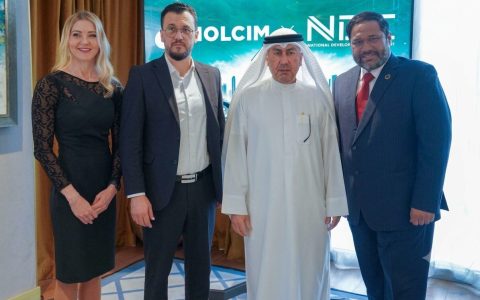
Image Courtesy: The Sustainable Times
Two organisations operating across different parts of the UAE development ecosystem are looking to address a familiar construction challenge: what happens when sustainability, engineering, technology and operations are considered together from the beginning rather than separately later?
Holcim UAE and the National Development Consortium (NDC) have signed a strategic Memorandum of Understanding aimed at creating a more integrated approach to large-scale development and infrastructure projects across the Emirates.
The agreement brings together Holcim’s capabilities in building materials, low-carbon construction and circular solutions with NDC’s wider project execution framework.
NDC operates as a UAE-based consortium bringing together engineering, smart infrastructure, sustainability, digital intelligence and strategic partnerships within a coordinated framework.
Under the MoU, the two organisations plan to connect a wider range of participants across the development process, including developers, government authorities, technical specialists, industrial operators and strategic investors.
The intention is to involve these capabilities earlier in project planning rather than treating engineering, technology, sustainability and operations as separate stages.
That could influence decisions ranging from the materials used in construction to energy efficiency, waste management and long-term operational performance.
A significant part of the collaboration concerns lower-carbon and circular construction.
Holcim’s contribution includes its low-carbon building-material solutions and circular platforms, while NDC provides a structure through which those capabilities can be integrated with wider planning, engineering and project delivery.
The partnership is also expected to explore construction-waste processing and waste-to-resource approaches as part of its wider sustainability agenda.
For the UAE property and construction industry, the significance lies in timing.
Sustainability requirements can become considerably more complex when introduced after fundamental decisions around design, materials and infrastructure have already been made. Bringing those considerations into projects earlier creates an opportunity to align environmental objectives with engineering and commercial requirements from the outset.
The MoU does not announce a specific development or investment value. Instead, it establishes a framework through which Holcim and NDC can collaborate on future opportunities across the Emirates.
As the UAE continues investing in large-scale urban and infrastructure development while pursuing its Net Zero ambitions, the partnership reflects a broader shift in the construction industry: sustainability is increasingly moving from an add-on to an early-stage development consideration.
Sources: Holcim UAE; National Development Consortium; TradeArabia