




State-backed direction, global connectivity, multi-district momentum, and an investor-friendly framework are the four forces driving Abu Dhabi's 2026 real estate ascent.
June 09, 2026 | Riya Malhotra | UAE | Real Estate | 5 Min Read
For much of the past decade, the UAE real estate conversation has been a Dubai conversation. That is changing. Abu Dhabi is entering a pivotal phase, quietly, but unmistakably, and the data now confirms what brokers, developers, and institutional investors have been signalling for months. The capital is no longer the secondary market in the UAE story. It is becoming a central one.
The shift is structural, not cyclical. Four forces are driving it, and each one is worth examining on its own terms.
At the foundation of Abu Dhabi's trajectory is a coordinated policy framework that has been in operation for over a decade. Abu Dhabi Economic Vision 2030, the long-term roadmap aimed at transforming the emirate into a diversified economy with reduced oil reliance, is already producing results. The capital's non-oil economy grew 6.6 per cent year-on-year in Q2 2025, reaching a record AED 174.1 billion, accounting for more than 55 per cent of total GDP.
Working alongside it is Plan Abu Dhabi 2030, the Urban Structure Framework Plan that guides sustainable urban expansion, infrastructure delivery, and connectivity. Together, these two frameworks do something simple but powerful, they make Abu Dhabi predictable. For real estate, predictability translates into investor confidence, and investor confidence translates into capital deployment.
This is the structural advantage Abu Dhabi has built that competing emerging property markets cannot easily replicate.
Geography continues to favour the UAE. Positioned between Europe, Asia, and Africa, Abu Dhabi places a significant share of the world's population within an eight-hour flight, supported by an integrated network of airports, ports, and highways.
The connectivity is not theoretical. Abu Dhabi Airports recorded more than 15.8 million passengers in the first half of 2025 alone, a level of international footfall that converts directly into property buyer interest. Khalifa Port and Zayed International Airport are central to that flow. Object 1's own buyer data shows particularly strong interest from India, European Union countries, the UAE itself, Turkey, and CIS markets, a buyer mix that few global property destinations can match.
For investors, this matters in a specific way. International buyers do not buy distant property unless they can physically reach it conveniently. Abu Dhabi's connectivity removes one of the most underrated barriers to cross-border investment.
Abu Dhabi's real estate strength is broader than any single district. The capital recorded more than AED 50 billion in transaction value in the first half of 2025 alone, a 39 per cent year-on-year increase, distributed across several distinct buyer profiles.
At the premium end, Saadiyat Island continues to anchor ultra-luxury activity, with transactions including a recent AED 400 million mansion sale that signals how far the high end of the Abu Dhabi market has matured. Yas Island benefits from sustained leisure and destination-led expansion, drawing both lifestyle buyers and investors confident in the long-term tourism story.
Mid-tier investor demand has shifted increasingly to Al Reem Island and Masdar City, where pricing and product type meet a clear demographic gap. At the more accessible end of the market, Al Reef and Al Ghadeer continue to lead on yield, attracting buyers prioritising income over appreciation.
This breadth is the part of Abu Dhabi's story most often underestimated. A market that runs from ultra-luxury Saadiyat to yield-led Al Reef is a market with depth, and depth is what protects pricing through cycles.
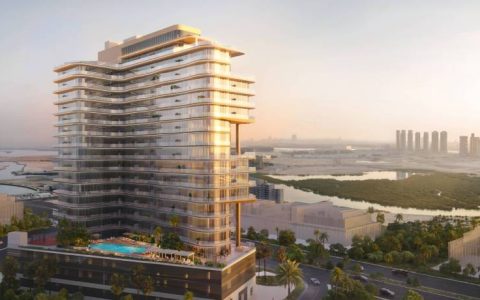
In line with this multi-district momentum, Object 1 has secured several waterfront plots on Al Reem Island spanning approximately 2.2 million square feet, reflecting our own conviction in the long-term direction of the capital's residential market.
The fourth force is structural rather than market-driven. The UAE's political and social stability, its open economy, and an investor-friendly regulatory environment continue to underpin global confidence. Foreign investors benefit from zero personal income tax and up to 100 per cent foreign ownership across free zones and selected sectors, provisions that competing global property markets often cannot match.
The result is visible in macro data. The UAE recorded its highest-ever foreign direct investment in 2024 at USD 45.6 billion, placing it among the world's top 10 destinations for FDI.
In Abu Dhabi specifically, institutions such as Abu Dhabi Global Market (ADGM) and innovation ecosystems like Hub71 further reinforce investor confidence, attracting global businesses, talent, and capital that drive sustained demand for both residential and commercial real estate.
Abu Dhabi's real estate demand is expected to remain strong as new supply enters the market, helping to keep price growth at a moderate, sustainable level. International investor interest is sustained by lifestyle-led, smart, and sustainable communities, the categories now driving the most credible buyer enquiry.
With major developments and attractions in the pipeline, the capital is well-positioned for its next phase of growth.
For the wider UAE real estate industry, the implication is clear. The Dubai-and-Abu-Dhabi conversation is no longer hierarchical. It is parallel. Both markets matter. And in 2026, the capital is making sure no one in the industry forgets that.
Sources: Contributed by Object 1. Supporting context referenced from Abu Dhabi Department of Economic Development data (non-oil GDP, Q2 2025); Abu Dhabi Real Estate Centre H1 2025 transaction data; Abu Dhabi Airports passenger statistics for H1 2025; UAE FDI 2024 figures via UNCTAD World Investment Report; Abu Dhabi Economic Vision 2030 and Plan Abu Dhabi 2030 frameworks.