






Emirates REIT reported funds from operations of $25.6 million for the first nine months of 2026, supported by lower expenses, strong occupancy and improving property income.
November 19, 2026 | Palak Kataria | UAE | Real Estate | 4 Min Read
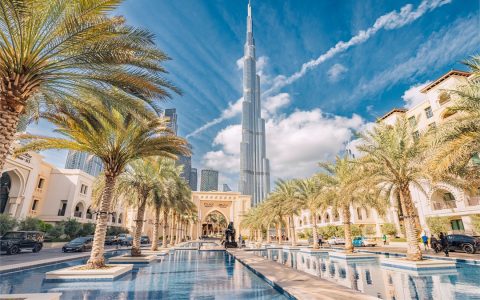
Image Courtesy: Magnific
Emirates REIT has reported a significant improvement in operating performance during the first nine months of 2026, with funds from operations (FFO) nearly doubling as the Dubai-based real estate investment trust benefited from lower expenses, reduced financing costs and stable property occupancy.
According to financial results by Equitativa (Dubai) Limited, the REIT's fund manager, FFO increased to $25.6 million for the nine months ended 30 September 2026, compared with $13.5 million during the corresponding period last year.
The results highlight improving income generation across the trust's property portfolio, even as its reported net profit declined because of lower property revaluation gains.
Total property income rose 12% year-on-year to $66.9 million, compared with $59.6 million in the previous year.
Net property income increased 16% to $59.9 million, while operating profit climbed 38% to $42.4 million.
The improvement was supported by stronger property income and continued cost management.
Fund expenses declined 15% to $17.5 million, down from $20.6 million a year earlier. Net finance costs also decreased by 2.6% to $16.8 million.
These reductions contributed to the increase in funds from operations, a measure used to assess the operating performance of real estate investment trusts.
For property investors, FFO provides an additional perspective on earnings because reported accounting profits can be significantly affected by changes in property valuations.
Despite stronger operating results, Emirates REIT recorded a substantial decline in reported net profit.
Profit for the nine-month period fell approximately 64% to $66.5 million, compared with $184.9 million a year earlier.
The decrease was primarily attributable to lower unrealised property revaluation gains, which dropped from $171.4 million to $40.9 million.
This distinction is important when assessing the trust's financial performance.
While property revaluations influence reported profit, they do not necessarily reflect cash generated from rental operations during the period.
The latest results therefore present two different trends: improving operating earnings and a sharp reduction in valuation-related gains.
For investors, examining both measures provides a clearer understanding of the trust's performance than considering net profit alone.
Emirates REIT maintained portfolio occupancy of 95% at the end of September 2026.
The figure reflects continued leasing activity across its portfolio, which includes commercial, education and retail properties.
The trust's investment properties were valued at approximately $1.21 billion, representing an increase of 4.9% year-on-year.
Its portfolio covers approximately 166,152 square metres of net lettable area.
High occupancy is an important operating indicator for income-producing real estate because it supports rental revenue and reduces the potential financial impact of vacant space.
However, occupancy alone does not determine profitability. Rental rates, operating expenses, financing costs and tenant quality also influence investment returns.
Emirates REIT's net asset value increased 8% year-on-year to a record $955.1 million, equivalent to $2.99 per share.
The trust also reduced its finance-to-asset-value ratio to 19%, compared with 20% a year earlier.
This represents a substantial improvement from the 62% ratio recorded at the end of 2020.
Over the same period, occupancy increased from 69% to 95%, reflecting the trust's longer-term operational recovery.
Thierry Delvaux, Chief Executive Officer of Equitativa, said the results demonstrate progress in operating performance and financial management.
He highlighted the importance of maintaining a strong balance sheet while pursuing opportunities that could support long-term shareholder value.
Emirates REIT paid an interim quarterly dividend of $7 million in September 2026.
The payment forms part of its approach to providing regular distributions to shareholders.
For investors seeking exposure to income-producing property, dividend sustainability depends on the trust's ability to generate recurring earnings while managing debt and maintaining its assets.
The latest results indicate stronger operating cash-generation measures and lower leverage, although future distributions will remain dependent on financial performance and the trust's distribution decisions.
As Dubai's commercial property sector continues to evolve, Emirates REIT's performance illustrates the importance of distinguishing recurring property income from valuation-driven accounting gains.
The trust enters the final quarter of 2026 with high occupancy, improved operating earnings and a stronger balance sheet, alongside the challenge of maintaining performance in changing property and financing conditions.
Sources: Emirates REIT; Equitativa; Zawya; AGBI; Property News International