






Dubai retained its global lead in $10 million-plus home sales during the third quarter of 2026, although falling transaction volumes indicate a moderation in luxury property activity.
November 17, 2026 | Palak Kataria | UAE | Real Estate | 4 Min Read
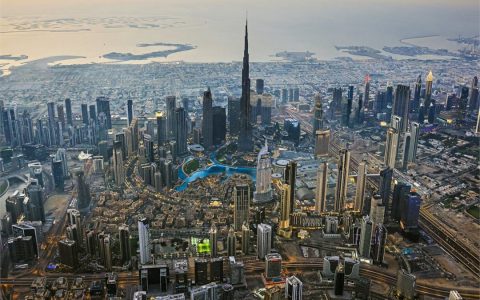
Image Courtesy: Goway Travel
Dubai retained its position as the world's busiest market for homes priced at $10 million or more during the third quarter of 2026, even as sales activity declined following a strong start to the year.
According to Knight Frank's Global Super-Prime Intelligence report, Dubai recorded 86 transactions worth $1.57 billion between July and September.
The emirate led the 12 international markets tracked by the consultancy in transaction volume, ahead of Hong Kong with 78 sales and New York with 62.
However, Dubai's quarterly transaction count declined by 34% compared with the preceding three months, while total sales value fell by 28%.
The figures point to a market that continues to attract substantial high-value investment but is experiencing a moderation in transaction activity.
Despite the quarterly slowdown, Dubai remained ahead of other major luxury residential destinations.
Hong Kong ranked second by transaction volume, recording 78 sales worth approximately $1.58 billion.
Although Hong Kong completed fewer transactions, its aggregate sales value narrowly exceeded Dubai's $1.57 billion.
This marked the first time since the second quarter of 2022 that Hong Kong had overtaken Dubai in total quarterly super-prime sales value.
New York followed with 62 transactions worth $1.08 billion, while Sydney recorded 57 sales valued at $724 million.
London registered 42 transactions worth $722 million during the quarter.
The rankings demonstrate the continued importance of Dubai within the global market for ultra-high-value residential property.
Dubai's third-quarter performance represented a significant reduction from the 131 sales recorded in the second quarter.
Transaction volumes were also approximately 16% lower than the corresponding period in 2025, while sales value declined by 21% year-on-year.
Knight Frank noted that the latest figures marked a second consecutive quarterly decline following exceptionally strong activity earlier in 2026.
The 86 transactions represented the lowest quarterly volume recorded in Dubai since the third quarter of 2024.
Nevertheless, the emirate maintained its global lead over the 12 months ending September 2026.
During that period, Dubai recorded 525 transactions worth approximately $9.25 billion, exceeding every other market tracked by Knight Frank.
Hong Kong followed with 346 transactions worth $6.65 billion.
The annual figures provide a broader perspective on Dubai's market position, indicating that the recent slowdown has not displaced its lead in global super-prime transaction volumes.
Within Dubai, established luxury communities continue to attract significant investment.
Knight Frank's earlier third-quarter residential analysis identified Palm Jumeirah as the emirate's leading location for $10 million-plus home sales.
The island recorded 27 transactions worth approximately AED2.01 billion during the quarter, representing nearly one-third of Dubai's super-prime transaction volume.
Other prominent locations included Jumeirah, Emirates Hills, Dubai Hills Estate and Jumeirah Golf Estates.
These communities remain important to Dubai's luxury residential offering, combining established infrastructure with premium housing and lifestyle amenities.
Knight Frank also reported that prices across ten prime residential neighbourhoods declined by approximately 5% between the second and third quarters, marking their first quarterly fall since 2020.
The price adjustment provides further evidence that the market is moving away from the exceptional growth rates recorded in earlier periods.
Dubai's moderation occurred alongside changing conditions across several international luxury property markets.
Knight Frank recorded 470 super-prime residential transactions across the 12 markets during the third quarter, down 19% from the revised second-quarter total.
Aggregate sales value reached $8.7 billion, representing an 18% quarterly decline.
However, market performance varied considerably between cities.
Sydney recorded a particularly strong quarter, with sales more than doubling to 57 transactions and total value rising 77% to $724 million.
New York also registered quarterly growth, with transaction volumes increasing by 9% and sales value rising by 11%.
London experienced weaker performance, with total sales value falling substantially as the market recorded fewer exceptionally high-value transactions.
The results illustrate how global luxury residential markets are responding differently to economic conditions, buyer sentiment and local supply.
Dubai's continued leadership in transaction volume reflects the scale of its established super-prime property market.
However, the decline in quarterly sales and prices suggests that buyers and developers are operating in a more selective environment.
For investors, changes in transaction activity may increase the importance of evaluating individual locations, property quality and pricing rather than relying on broader market momentum.
For developers, the figures underline the need to consider demand patterns carefully when planning future luxury residential supply.
The distinction between quarterly and annual performance is also important.
While the latest quarter showed weaker activity, Dubai's 12-month transaction figures remained ahead of other global markets.
The emirate therefore enters the final months of 2026 as the world's leading super-prime residential market by transaction volume, although its recent performance suggests a more measured phase of activity.
Sources: Knight Frank; Khaleej Times; The National; Reuters; CBRE