





Dubai ranks first globally for branded residential developments, while Ras Al Khaimah and Abu Dhabi also feature among the top ten cities, according to Savills' latest report.
November 18, 2026 | Palak Kataria | UAE | Real Estate | 3 Min Read
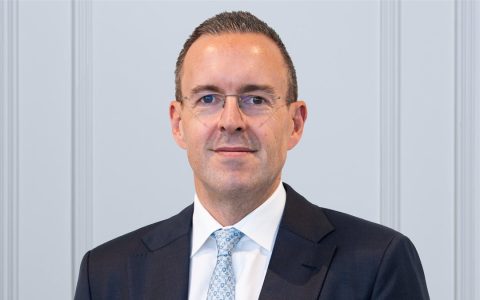
Image Courtesy: Savills
Dubai has retained its position as the world's leading city for branded residences, according to the Savills Branded Residences Annual Report 2026–2027, which highlights the Middle East's expanding role in the global luxury residential sector.
The rankings, based on completed developments and projects in the pipeline, place Dubai first globally, followed by Ras Al Khaimah in third position and Abu Dhabi in eighth.
Cairo also features prominently, ranking fifth worldwide.
At the country level, the UAE ranks second behind the United States, while Saudi Arabia and Egypt occupy seventh and eighth positions, respectively.
The findings reflect the growing concentration of branded residential developments across the region, extending beyond established luxury property markets into emerging destinations.
Dubai's leading position reflects its established market for residences associated with internationally recognised hospitality, lifestyle and luxury brands.
The emirate has attracted a broad range of branded developments, combining residential ownership with services and amenities linked to established operators.
However, the latest rankings also demonstrate that branded residential development is expanding across the wider UAE.
Ras Al Khaimah's third-place ranking reflects its growing pipeline of hospitality-linked residential projects, while Abu Dhabi's eighth-place position highlights increasing developer interest in the capital.
The presence of three UAE cities among the global top ten illustrates how branded residences are becoming a more prominent component of the country's residential development landscape.
Andrew Cummings, Head of Residential Agency at Savills Middle East, said the rankings demonstrate the depth of Dubai's market and the expansion of branded living into other regional destinations.
He also emphasised that developers must consider the relationship between the brand, location and intended buyers when planning projects.
According to Savills, the Gulf Cooperation Council has 99 completed branded residential projects, with another 251 developments in the pipeline.
The GCC pipeline is the largest among the sub-regions compared in the report.
The UAE remains a major contributor to this activity, although Saudi Arabia is also emerging as an important market for branded residential investment.
The scale of the pipeline indicates that developers increasingly view branded residences as a distinct property category rather than an extension of conventional luxury housing.
However, planned developments do not necessarily translate into completed supply within their original schedules.
Construction progress, financing, regulatory requirements and market demand will influence how quickly the pipeline is delivered.
Savills projects that branded residential supply across the Middle East and Africa could increase by 51% by the end of 2026, assuming scheduled completions proceed as planned.
This compares with projected global growth of 24% over the same period.
Over the longer term, the report forecasts that the region's branded residential supply could increase by 255% from its 2026 base by 2040.
If the current pipeline is delivered, the Middle East and Africa would account for approximately 23% of global branded residential supply by 2040, approaching Asia Pacific's projected 24% share.
Northern Africa is also expected to contribute significantly to future growth.
Savills anticipates supply in the sub-region could increase by more than 400%, driven primarily by developments in Egypt and Morocco.
These forecasts suggest that branded residential growth is becoming increasingly geographically diverse.
Although hotel operators remain closely associated with branded residences, the sector is expanding into new categories.
Savills identifies growing participation from fashion, automotive and specialist wellness brands, reflecting the wider appeal of branded residential concepts.
Standalone branded residences are also gaining importance.
Unlike developments connected to a hotel, standalone residences operate independently while retaining an association with a recognised brand.
Such projects now represent 36% of the global development pipeline, compared with 33% in the previous year.
The shift suggests that developers are increasingly using branding to differentiate residential projects without necessarily incorporating a hotel component.
As branded residences become more widely available, Savills expects competition between developments to increase.
A recognised brand may help establish market positioning, but the quality of the residential experience will remain important.
Buyers are likely to consider property design, available services, management arrangements and ongoing ownership costs when evaluating developments.
These factors may become increasingly significant as new projects enter the market.
For developers, the challenge will be to ensure that brand partnerships translate into meaningful residential benefits rather than relying exclusively on name recognition.
Dubai's leading global position demonstrates the maturity of its branded residential market, while the rankings of Ras Al Khaimah and Abu Dhabi point to the sector's wider expansion across the UAE.
With a substantial regional pipeline, the next phase of growth will depend not only on the number of developments launched but also on their delivery, management and long-term appeal to buyers.
Sources: Savills Middle East