




Exclusive insights for real estate investors: Explore the latest facilities management trends in Dubai/UAE. Learn how fm tech (AI, IoT) and sustainability mandates are boosting asset value and maximizing ROI across the facilities management uae market. Stay ahead with critical facilities management news.
November 10, 2025 | Staff Reporter | UAE | Facilities Management
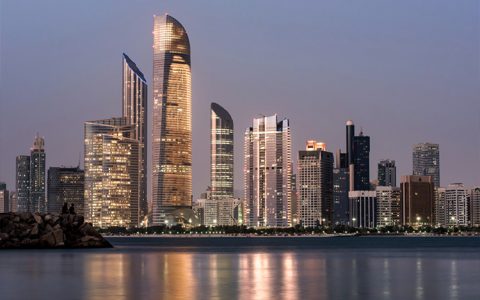
The United Arab Emirates remains a prime destination for global real estate investment, fueled by ambitious urban planning and mega-projects across Dubai and Abu Dhabi. As this built environment matures and the market becomes increasingly competitive, the long-term success of any real estate portfolio is no longer determined solely by location or construction quality but by the operational efficiency and management of the asset. The quality of Facility Management (FM) has transitioned from a necessary cost center to a crucial profit multiplier that dictates asset valuation and long-term capital preservation.1
The sheer scale of the $\text{facilities management uae}$ market underscores this strategic importance. The market value is projected to surge dramatically, reaching USD 33.64 Billion by 2030, driven by a robust Compound Annual Growth Rate (CAGR) of 10.69% between 2025 and 2030.3 This forecast indicates unprecedented demand and opportunity for sophisticated, integrated service providers.4 However, this massive projected growth presents a fundamental challenge: FM is a labor-intensive sector already grappling with labor shortages and a critical skills gap.5 Therefore, the sustained expansion and profitability of the market hinges entirely on the ability of FM firms to scale service delivery without proportional increases in human resources. The latest $\text{facilities management news}$ confirms that technology and sustainability are not optional upgrades but mandatory scaling solutions and critical indicators of a future-proof asset.
The primary countermeasure against the UAE FM sector's service delivery constraints—specifically the shortage of adequately trained workers proficient in technical skills like HVAC systems and IT integration 5—is rapid digital transformation. The integration of Artificial Intelligence (AI) and the Internet of Things (IoT) is redefining building management, forming the new foundational pillar of modern FM.6
The most significant financial application of $\text{fm tech}$ is the adoption of Predictive Maintenance (PdM). This proactive approach utilizes real-time sensor data and AI-driven analytics to shift maintenance strategies away from reactive fixes or static scheduled servicing.8 By analyzing equipment performance trends, PdM enables facility managers to anticipate and address equipment failures before they occur, thereby maximizing return on investment (ROI) for expensive infrastructure.8
The financial benefits of this approach are quantifiable and immediate for investors seeking to optimize Net Operating Income (NOI). Data indicates that predictive maintenance powered by AI is reducing equipment downtime by up to 70% and cutting overall maintenance costs by 25% across the region.9 This level of operational efficiency minimizes unexpected capital expenditure, maximizes asset lifespans, and results in drastic reductions in monthly energy consumption through optimized power usage.10
For real estate investors, the short horizon for technology returns in the UAE makes the case for digital investment compelling. While capital expenditures for smart technologies might seem high, UAE senior leaders report some of the strongest productivity gains from AI in the entire EMEA region (77% reported significant improvements).11 Crucially, 44% of respondents anticipate achieving measurable ROI on AI investments in under 12 months.11 This short ROI cycle, coupled with the ability of AI to fill strategic skill gaps—a benefit recognized by 70% of UAE respondents 12—justifies treating sophisticated $\text{fm tech}$ investments as critical operational expenditures necessary for maintaining asset competitiveness and maximizing liquidity.
Furthermore, digital transformation extends beyond maintenance. Building Information Modeling (BIM) offers a centralized repository of real-time data, often referred to as a "digital twin," that provides an encyclopedic understanding of building functions, mechanical systems, and floor area utilization.13 This technology is essential for managing the complex lifecycle of modern, high-rise buildings and supports strategic decision-making in capital projects, preventative maintenance planning, and space optimization.13
To fully leverage these digital systems, many property owners are adopting Integrated Facilities Management (IFM). IFM involves partnering with a single provider who takes ownership of all aspects of facilities care—from technical and trade services to remote monitoring and energy management.15 This approach eliminates operational silos, reduces the number of vendors, and simplifies contracts, offering investors a unified, accountable service team with greater visibility across all FM functions, leading to continuous improvements and long-term cost savings.16
Sustainability is no longer a niche concern but a defining characteristic of current $\text{facilities management trends}$ in the Middle East.17 Governments are transitioning from commitment to action, embedding sustainability into long-term national strategies, notably through the UAE’s Green Agenda.7 This regulatory environment includes clear, enforceable targets, such as the government mandate for a 30% reduction in energy consumption across public buildings by 2030.9
For investors, sustainable $\text{facilities management uae}$ strategies translate directly into financial advantage. Organizations prioritizing sustainability gain a major edge by reducing operating costs through optimized energy management and water conservation technologies.4 Over 70% of facility managers in the region actively incorporate sustainability into service delivery, often retrofitting older buildings with energy-efficient systems to meet evolving green building standards.9 This effort to meet regulatory requirements and pursue certifications (like LEED) minimizes regulatory risk and positions the assets as attractive spaces for high-value tenants who prioritize environmental responsibility.18
Beyond energy, modern FM emphasizes occupant wellness, a trend intensified post-pandemic. Priority is placed on enhancing Indoor Air Quality (IAQ), implementing sophisticated cleanliness protocols, and investing in advanced technologies like UV disinfecting systems.18 This focus creates responsive, human-centric environments, which are a critical component of tenant satisfaction and retention.19
Furthermore, adherence to strict new planning standards, such as the Abu Dhabi Community Facility Planning Standards overseen by the Department of Municipalities and Transport (DMT) 20, is vital. Compliance with these high standards for safety, security, and sustainability minimizes operational risks. Conversely, investors in non-compliant or inefficient buildings face escalating operational costs and reduced marketability, cementing sustainability as the minimum standard for asset quality.
The most critical $\text{facilities management news}$ for real estate investors is the direct, measurable correlation between high-quality FM and enhanced property valuation.
Effective FM simultaneously optimizes the income stream and minimizes expenses, creating a significant compounding effect on Net Operating Income (NOI). Industry data highlights that professionally managed properties in Dubai and Abu Dhabi often command rental rates that are 10–15% higher than their unmanaged counterparts.2
More importantly, FM is the primary driver of tenant retention. Quick, efficient resolution of maintenance requests and a high standard of service foster positive living or working environments.2 Studies show that optimized maintenance response times can lower tenant turnover by up to 30%.22 This tenant stability ensures consistent occupancy and reliable cash flow, which are fundamental drivers of strong ROI.23 By proactively shifting budgets toward preventive maintenance, FM providers extend the lifespan of costly equipment and allow owners to plan budgets more accurately, avoiding the unpredictable spikes associated with emergency call-outs.4
The following table synthesizes the quantifiable impact of modern, tech-enabled FM strategies on an investor's bottom line:
FM Tech & Strategy: Quantifiable ROI for UAE Real Estate Investors
|
FM Strategy |
Investor Benefit / Impact on NOI |
Quantifiable Metric (UAE Data) |
|
AI-Powered Predictive Maintenance |
Reduced repair costs, maximized asset lifespan, minimal downtime. |
Up to 70% reduction in equipment downtime; 25% cut in maintenance costs.9 |
|
Strategic Facilities Management |
Increased gross income and stable tenancy. |
10–15% higher rental rates compared to unmanaged assets.22 |
|
Enhanced Occupant Experience |
Improved tenant loyalty and stability. |
Up to 30% lower tenant turnover rate.22 |
|
Digital Transformation & AI Adoption |
Accelerated efficiency gains, mitigated labor risk. |
44% of UAE senior leaders anticipate ROI on AI initiatives within 12 months.11 |
The $\text{facilities management uae}$ market is maturing rapidly, evidenced by global professional milestones, such as the International Facility Management Association’s (IFMA) Facility Management Professional (FMP) credential surpassing 20,000 global recipients in January 2025.24 Furthermore, regional operators are leveraging global ISO FM standards to reduce operational variability and maximize value.25
The competitive landscape is defined by robust local and international entities driving this adoption, including major players such as Emrill Services LLC, Imdaad L.L.C., Farnek Services LLC, EFS Facilities Management Services, Khidmah LLC, and Enova Facility Management Services LLC.3 These firms are the architects implementing the sophisticated digital and sustainable strategies required by today’s investors.
Financial transparency is also mandated by the regulatory environment, with bodies like the Dubai Land Department (DLD) and the Real Estate Regulatory Agency (RERA) strictly overseeing the management and allocation of service charges.27 This framework ensures that shared financial responsibilities, covering security, utilities, and maintenance, are managed efficiently, protecting the investor's long-term interests against property degradation.27
The central takeaway from the latest $\text{facilities management news}$ in the UAE is that FM is fundamentally changing how real estate value is created and sustained. The future is clearly defined by integrated, intelligent, and green operations. The operational challenges posed by fluctuating energy costs and workforce limitations are being systematically overcome by the strategic, high-ROI adoption of $\text{fm tech}$.
To secure long-term capital preservation and maximize profitability in the highly competitive UAE market, investors must move beyond simple cost vetting. Success now requires partnering with Integrated Facilities Management providers who demonstrate proven expertise in AI, predictive analytics, verifiable ESG performance, and strong compliance adherence. This strategic shift in focus is the critical new prerequisite for success in the dynamic real estate environment of the UAE.