




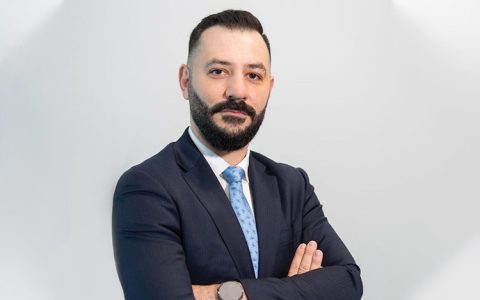
Tarek Al Assil, Executive Director, iFM Facilities Management, spotlights how facilities management is shaping intelligent environments through purpose-led innovation, empowered people, and scalable systems that redefine ROI in the built world.
September 02, 2025 | Tarek Al Assil | UAE | Facilities Management | 5 Min Read
As someone who has led integrated facilities management (IFM) across some of the world’s most iconic developments, I’ve witnessed a remarkable shift in the industry. Facilities management today is no longer about routine maintenance or keeping the lights on. It’s about creating intelligent environments that support how people live, work, and interact.
The industry is being pushed beyond traditional service models. We are being asked to rethink how buildings behave, how teams operate, and how value is defined. This isn’t just about adopting new tools, it’s about purposeful leadership that ensures innovation delivers tangible, sustainable outcomes.
Start With Purpose, Not Just Technology
In FM, innovation often gets reduced to shiny gadgets, robotics, dashboards, sensors. But in my experience, that’s not where transformation begins.
True innovation starts with intent. We need to ask purpose-focused questions:
At iFM, every investment in technology is evaluated through a single lens: purposeful ROI. If a solution doesn’t improve performance, reduce risk, enable sustainability, or empower people, it doesn’t belong in our ecosystem.
People and Technology: A Collaborative Model
Let’s be clear, technology isn’t here to replace people. It’s here to elevate them.
We’ve deployed robotics in high-traffic concourses and secure facilities,not to reduce headcount, but to reallocate human effort. Robots now handle repetitive cleaning, surveillance patrols, and data collection. This allows our frontline teams to focus on what matters most: safety, customer experience, and quick decision-making in dynamic situations.
The same is true for AI. In our control rooms, systems monitor data in real time, flag anomalies, and support decision-making. But the final judgment,especially in critical situations,still rests with the human operator. We’re not automating people out of work. We’re automating toward smarter work.
Innovation Starts at the Ground Level
One of the most overlooked truths in FM is that innovation doesn’t always come from the board room,it often starts on the ground.
Some of our most effective ideas have come from engineers and technicians in the field. These are the people who spot inefficiencies in real time, who build practical workarounds, and who often challenge “the way things have always been done.”
Our job as leaders is to make space for these voices. We’ve built internal platforms that allow ideas from the field to be tested in pilots, evaluated for impact, and then scaled across our portfolio. This is how we turned predictive maintenance from a theory into a standard. It’s how we transformed energy dashboards from passive reports into real-time decision tools.
Digital Transformation That Serves People

When we introduced cloud-based CAFM platforms and IoT sensor integrations, the goal wasn’t just process automation,it was clarity.
Now, our teams work with real-time data. They respond faster, allocate resources more efficiently, and create safer, more transparent environments. But the impact goes beyond internal operations. Clients and tenants expect facilities that are responsive, intuitive, and personalized. A digitally enabled FM model can meet those expectations, but only when it’s built around people.
Technology must adapt to human needs, not the other way around. That’s the principle behind every system we deploy.
Sustainability: A Strategic Imperative
Sustainability in FM is no longer an optional layer, it is central to how we operate.
Our industry is uniquely positioned to impact energy usage, waste reduction, and long-term asset value. Whether it's extending the life of critical systems or optimizing HVAC consumption through AI, every operational decision has environmental and financial implications.
But sustainability isn’t just about smart meters or carbon dashboards. It’s about mindset. It’s about leadership that embeds green practices into everyday workflows,not just annual reports. At iFM, we see sustainability as a business strategy, not a compliance checkbox.
Scaling Innovation with Discipline
Innovation in a single building is interesting. Innovation across a portfolio is transformational.
For that to happen, we must design systems that scale. That means aligning data models, building governance frameworks, training teams, and setting consistent KPIs. Without the ability to scale and replicate, even the best innovation becomes a one-off success story instead of a competitive advantage.
If it can’t scale, it’s not a solution, it’s a pilot.
Final Thoughts: The Human Edge in a Smart Future
We’re entering a new era of FM, one where buildings can sense, respond, and even anticipate needs. But no matter how smart the infrastructure becomes, human development will remain the most critical differentiator.
I believe the future belongs to those who can blend operational excellence with human intelligence. Those who are bold enough to challenge assumptions, humble enough to listen to frontline voices, and focused enough to apply technology with intent.
Innovation is not a trend or a product. It’s a discipline, a way of thinking, operating, and leading. And if we want to shape the future of FM, that discipline must start with purpose-driven leadership.
REM TIMES brings you the latest Dubai facilities management new