





Over 40,000 people are moving each day to Africa’s cities
November 19, 2025 | Staff Reporter | Kenya, Africa | Property Management | 2 Min Read
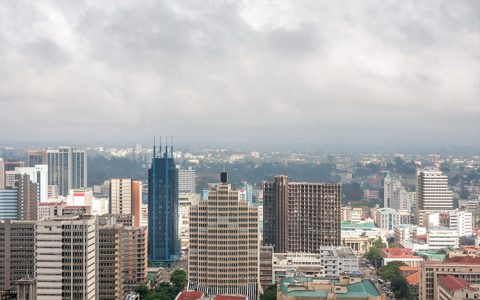
A US$1.3 billion public-private financing plan by the World Bank for Kenya’s real estate market reflects the sky-rocketing demand for housing in Africa, the fastest urbanising continent. Over 40,000 people a day are moving to Africa’s cities; over half of the continent will be urbanised by the early 2030s with Africa’s population projected to grow to 2.4 billion by 2050.
The Bank’s plan, which supports Kenya’s state-owned Mortgage Refinance company, aims to diversify financing sources and includes some innovative ideas to restructure some of the country’s sovereign debt. Kenya’s housing deficit is running at over 2m units, with demand growing at 250,000 units a year. Over 50% of city dwellers live in informal settlements such as Kibera and Mathare Valley.
Among the big five real estate sectors in Africa, Kenya’s market is one of the most diversified, combining offices, retail space, logistics, tourist accommodation and a fast-growing residential sector, according to UN Habitat and the International Finance Corporation (IFC), the IWorld Bank’s commercial arm. Of the other, South Africa is seen as the most developed property market, making up just over a quarter of Africa’s formal real estate sector.
With a large domestic market (over 119m people with 20m in Cairo and suburbs alone) and an aggressive state-driven urban development plan with new cities along the Nile and fringes of the desert, Egypt has about 15% of Africa’s real estate market.
Housing demand – estimates of a deficit of 28m units – is highest among Nigeria’s over 230m people and fast growing cities: Lagos, Port Harcourt and Abuja. Alongside Kinshasa and Cairo, Lagos is one of Africa’s fastest-growing megacities: all have populations of over 20m each. Dar es Salaam is projected to become a megacity with over 10m people by 2030.
Policymakers may see the Bank’s $1.35bn project in Kenya as a template to counter obstacles caused by weak planning, infrastructure bottlenecks, excessive land-use laws, and outdated housing finance systems that are seen as holding back expansion.