




As markets worldwide move toward professionalising shared ownership governance, the framework built in Dubai is drawing international attention.
May 18, 2026 | Tripti Mehta | UAE | Community Management | 3 Min Read
How do you run a building that thousands of people call home? It sounds like a straightforward question until you are the one responsible for answering it. Governance, legal accountability, technology, finances, resident relations: the job of managing shared residential communities is one of the most complex, underleveraged roles in real estate. And increasingly, the world is trying to figure it out together.
The global conversation around community management is maturing. Markets that once developed their own answers in isolation, shaped by local law, developer culture and custom, are now actively comparing notes. The themes circulating internationally will feel familiar to anyone working in Dubai real estate: how governance frameworks across the emirate keep pace with the scale of modern developments, what role AI and digital tools genuinely play in building operations, and how the profession invests in the people who carry it.
That last point is gaining ground. The community management role sits at the intersection of financial oversight, legal accountability and resident relations, and the industry is beginning to treat it with the seriousness that complexity deserves. More markets are moving toward licensing, structured governance, and professionalisation of the administrator role. Dubai has been ahead of this curve for some time.
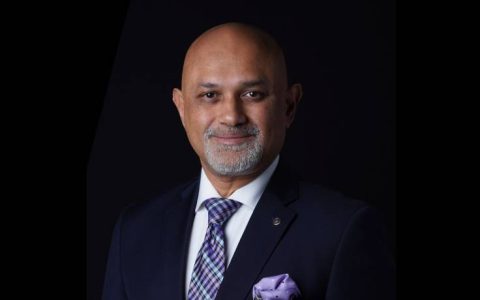
Which is part of why Prof. Jeevan D'Mello, CEO of Zenesis Consulting and widely recognised as the Father of Community Management in the Middle East, was among the international voices at April's Congreso de Administradores de Propiedad Horizontal in Panama City. The architect who built the region's largest community management operation at Emaar Properties, overseeing developments including Burj Khalifa, spoke about what Dubai has spent years refining: how freehold communities are structured, governed, and turned into places residents are proud to call home.
During his presentation, he spoke about his work in Dubai and the Middle East. He shared his experience managing iconic projects, including Downtown Dubai and Burj Khalifa, but his main focus was the Dubai Community Management model.
He described the model as more than a regulatory framework; as a practical operating system for urban living. Emerging from Dubai’s freehold transformation, it brought together ownership, governance, service charges, facilities management, resident engagement and regulatory oversight at remarkable speed.
“Its strength lies in combining developer vision with structured stewardship, supported by Dubai’s Real Estate Regulatory Agency (RERA), professional community managers and service providers. What makes the model distinctive is its balance between ambition and discipline: iconic communities are not only built, but maintained, governed and continuously improved,” he noted in his presentation.
The direction is clear. The knowledge built in Dubai and then across the UAE, through years of governing complex, large-scale communities, has reach beyond the region. Dubai has more to contribute to that conversation than it perhaps gets credit for. And the world is beginning to recognise that.