




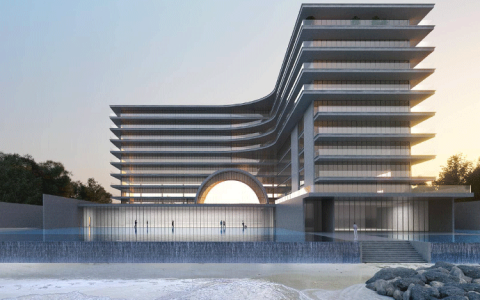
Branded residences in the UAE have moved decisively beyond novelty. As supply accelerates toward the end of the decade, the real question for developers and investors is no longer whether branded living will grow, but where the next wave of demand will emerge and which markets will define its future.
April 22, 2026 | Staff Reporter | UAE | Developers | 6 Min Read
The UAE’s branded residences market is underpinned by strong macroeconomic fundamentals and sustained wealth migration. What began as a luxury differentiator has evolved into a structured residential asset class, driven by population growth and increasingly sophisticated global buyers. Industry research from CBRE and Savills indicates that the UAE is now one of the world’s most active branded residences markets, with Dubai, Abu Dhabi and Ras Al Khaimah each occupying a distinct stage of the development cycle. The country continues to attract one of the largest inflows of high-net-worth individuals globally, supported by robust non-oil sector growth and a stable investment environment.
At the same time, a new buyer cohort is reshaping the residential landscape. Global wealth studies referenced in CBRE’s UAE Branded Residence Report highlight the rise of so-called “Everyday Millionaires” (EMILLIs), individuals with assets of US$1–5 million, who are increasingly seeking branded homes that combine security, services and brand assurance without the ultra-prime price tag.
Population growth is reinforcing this demand base. Dubai’s population has surpassed 4 million residents, while emerging markets such as Ras Al Khaimah are expanding rapidly from smaller bases. Together, these demographic and wealth trends are broadening the addressable market for branded residences across multiple price tiers.
Dubai: A Mature Market Entering Its Segmentation Phase
Dubai remains the UAE’s largest and most liquid branded residences market. Transaction data shows strong growth in both sales volumes and values in recent years, with branded homes continuing to command substantial price premiums compared with non-branded stock.
According to CBRE’s UAE Branded Residence Report 2025, the city recorded a 26% year-on-year increase in branded residence transaction volumes during the first nine months of 2025, alongside a 51% rise in transaction value. Investors are paying an average premium of around 64% for branded units compared with non-branded homes in similar locations.
However, the nature of demand is evolving. Rather than a single ultra-luxury segment, the market is increasingly splitting into multiple tiers. Ultra-prime projects continue to attract ultra-high-net-worth buyers seeking trophy assets, while a growing pipeline of branded residences is targeting affluent professionals and global investors in the emerging millionaire segment.
Another defining characteristic of the market is the dominance of off-plan investment. More than 80% of branded residence transactions in Dubai currently occur in the off-plan segment, highlighting strong investor appetite for early access to flagship branded developments and flexible payment structures.
This segmentation suggests that Dubai is not approaching a peak but entering a maturing phase, where brand partnerships, pricing strategies and operational delivery will become more important differentiators than simply attaching a luxury label to a project.
Abu Dhabi: Scarcity-Driven Premiums
Abu Dhabi’s branded residences market has developed along a different trajectory. While transaction activity has grown significantly in recent years, the market remains defined less by scale and more by scarcity.
Market data from CBRE shows that branded residences in Abu Dhabi command an average premium of around 87% compared with standard residential properties in comparable locations, among the highest premiums recorded globally.
Limited prime waterfront land, carefully controlled development pipelines and high-quality master planning have created a market where branded residences command some of the strongest premiums in the region. Buyers are typically long-term investors or family offices seeking stability and prestige rather than short-term capital gains.
Cultural infrastructure, tourism growth and major destination projects continue to reinforce Abu Dhabi’s position as a premium residential environment. As a result, branded residences here are often positioned as capital-preservation assets, rather than high-volume sales products.
Ras Al Khaimah: Emerging Branded Market
Ras Al Khaimah represents the UAE’s most forward-looking growth opportunity in branded living. While still a smaller market, the emirate has seen rapid expansion in tourism, infrastructure and residential development over the past few years.
According to CBRE projections, branded residences could represent 54% of RAK’s residential supply by 2030, reflecting the emirate’s tourism-led development strategy. The key catalyst has been the Wynn Al Marjan Island integrated resort, now under construction and scheduled to open in Spring 2027, which has effectively anchored the sector with a major long-term demand driver. Compared with Dubai or Abu Dhabi, RAK offers lower entry price points, making it attractive to investors seeking lifestyle properties or rental income.
Because the market is still developing, performance will depend heavily on brand strength, operational quality and tourism growth. For developers and investors alike, RAK represents an earlier-cycle opportunity with potentially higher upside but also greater sensitivity to market execution.
The UAE’s branded residences story is entering a more nuanced phase. While demand remains strong, success will increasingly depend on aligning product, price point and brand identity with the right market.
Dubai’s scale offers liquidity and segmentation opportunities. Abu Dhabi provides scarcity-driven premiums and long-term stability. Ras Al Khaimah represents the next frontier of resort-led branded living. For industry stakeholders, the message is clear: the next chapter of branded residences in the UAE will be defined not by headline launches, but by discipline, differentiation and delivery.